 LOADING ....
The music industry takes its responsibility to help parents determine what may be inappropriate for their children seriously — that’s why RIAA and its member companies created the Parental Advisory Label (PAL) program over four decades ago as a voluntary initiative for record companies and artists that protects freedom of expression while helping parents and families make informed consumption decisions.
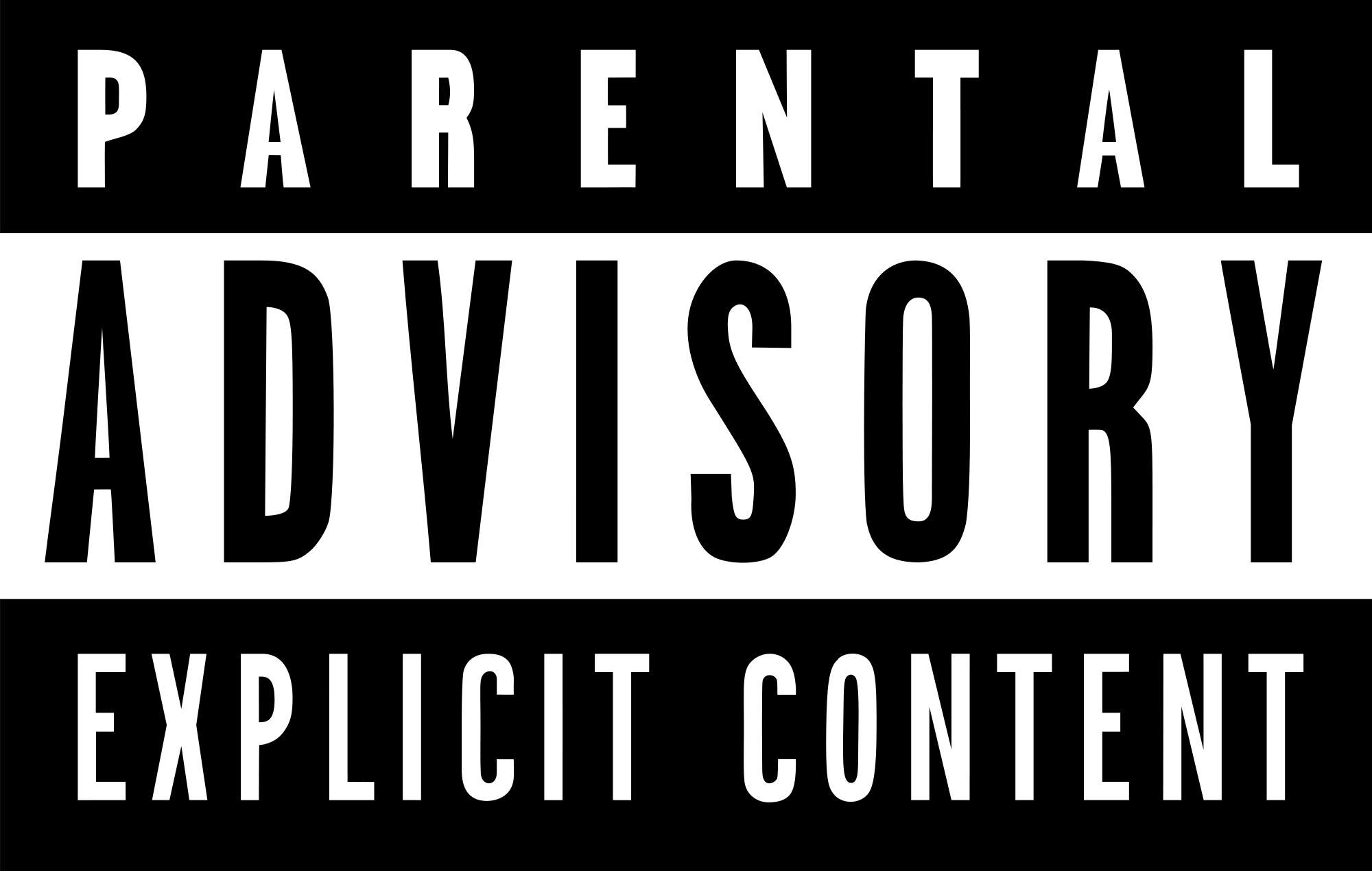
Under this program, RIAA has created and owns a PARENTAL ADVISORY EXPLICIT CONTENT trademark (the “PAL Mark”) that can be used to identify sound recordings and audiovisual works that may contain material that is inappropriate for children.
The PAL Mark is applied to identify a release as explicit when an artist or record company decides that there is musical and artistic credibility in a recorded work even if the content may be too explicit for mainstream distribution. In some instances, an artist may re-record certain songs or revise lyrics because a creative and responsible view of the music demands such a revision.
The RIAA does not represent music retailers or online platforms but works with others to ensure that parents are forewarned when content may be inappropriate for children.
Any artist or record company that wishes to use the PAL Mark to label music according to RIAA’s Standards may do so free of charge only after entering into a License Agreement with RIAA and receiving a fully executed copy in return along with the PAL graphic. Use of the PAL Mark on any other product or in any other manner is prohibited without the express, written permission of RIAA. Interested parties must contact RIAA directly at (202) 775-0101 for information on how to apply for a license.